

When 400 researchers gather on 'Shaheen III': What the High-Performance Computing and Artificial Intelligence Conference at KAUST left behind

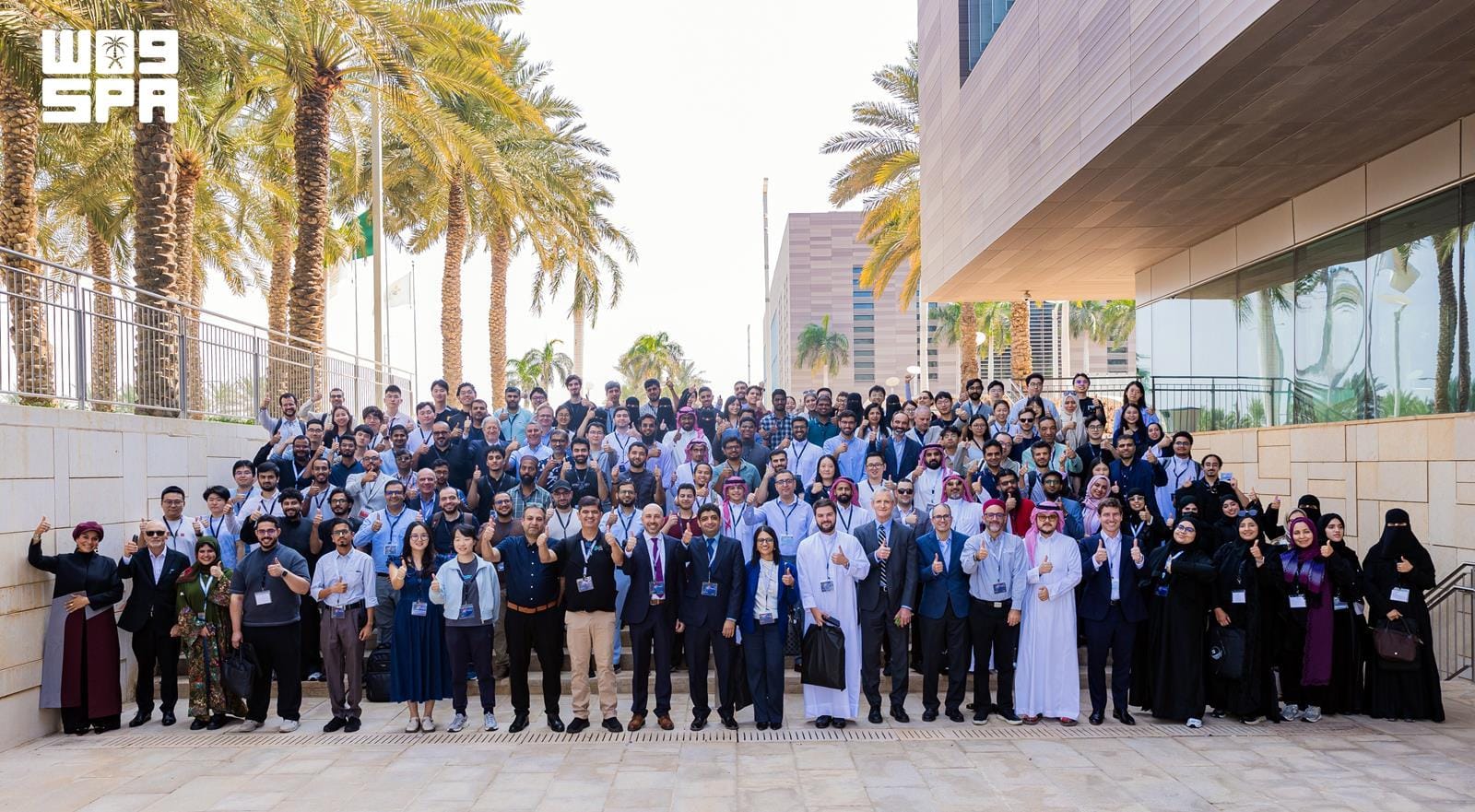
Three days in Jeddah, four hundred researchers, an industry leader, a government official, and a single supercomputer were assembled to carry the weight of national ambition. The 13th High-Performance Computing and Artificial Intelligence Conference, hosted by King Abdullah University of Science and Technology (KAUST) from 26 to 28 October, was not merely a seasonal academic event. It was a point of intersection between a computational capability that had just reached maturity and a national will that seeks to turn that capability into solutions that touch citizen health, food security, energy, and future economy.
President Edward Byrne opened the conference with a direct statement: high-performance computing and artificial intelligence are no longer a research luxury, but have become pivotal to accelerating discovery and innovation in Saudi Arabia’s four research, development and innovation priorities: health and wellbeing, sustainable environment and basic needs provision, leadership in energy and industry, and future economies. Byrne’s words did not stay in the realm of generalities; he noted that translating computational power into scientific progress requires conscious decisions in algorithms, data, software, and output verification. That full chain, from code to impact, is what separates “computational capability” from a “change-making tool.”
Conference chair Dr. Saber Feki, director of KAUST’s Core Research Computing Laboratories, set the practical framework: the five conference tracks, basics and horizons, specialized applications, smart systems and cyber technologies, emerging technologies and data, and smart cities, were designed to directly touch those national priorities. Over three days, 142 scientific papers were distributed, 25 parallel sessions held, six keynote speakers presented, two specialized training workshops ran, and seven hours of hands-on training were offered. Numbers alone do not create impact, but the structure that carried them does: researchers from KAUST and experts from academia and industry sat at the same table, not in passive presentation sessions, but in discussion about early projects that already used graphics processing units (GPUs) in the supercomputer “Shaheen III” recently released by the university.
What distinguishes this conference from its previous editions is the shift of focus from “building capability” to “deploying capability.” The hardware exists, the software is mature, and the challenge now is how to transfer expertise to the next generation of scientists and how to build collaborative bridges that turn an early project into a solution that serves a hospital, a factory, an electricity grid, or a smart city. Feki confirmed that transferring expertise in high-performance computing and artificial intelligence is not merely a training goal, but an opportunity to create career pathways that support national research priorities and give participants tools that influence their professional trajectory.
The regional context here is inseparable from the event. Saudi Arabia is investing in world-class computational infrastructure, and KAUST’s annual conference has become the platform that tests that infrastructure against real problems. The projects presented, from health applications to climate modelling and energy simulation, paint a picture of a country that does not merely acquire technology, but seeks to create local use cases. For those working in the Gulf’s tech or research sector, the message is clear: demand for talent that speaks the language of high-performance computing and speaks the language of artificial intelligence together is rising, and platforms that allow hands-on experience on machines such as “Shaheen III” are no longer limited to a few centres, but are available at the heart of the national academic ecosystem.
The conference closed its doors, but the questions it raised remain open: how do we ensure that every computational cycle spent on “Shaheen III” brings us closer to a result that matters to the citizen? How do we build a sustainable bridge between a research paper presented in a parallel session and a product or service that reaches the market? KAUST, in its 13th edition, set the bar higher. The evidence is not in the number of attendees, but in the quality of the discussion that took place in the corridors after the official sessions: young researchers asking for time on the machine, industry leaders looking for a research partner, and government officials listening to direct technical feedback. That is the real currency of a conference like this, and it will determine whether the 14th edition will reap rewards or repeat promises.