

Student talents under the microscope of artificial intelligence at Irtiqa Conference

Listen to this article
Read by Anchor
Can artificial intelligence help teachers discover their students' abilities without becoming a substitute for their role?
A question that asserts itself strongly as the rapid expansion of AI technologies in education continues, and it was one of the key topics discussed byInternational Irtiqa Conference (a global forum on education and AI)
The conference kicked off with a select group of experts and specialists in English language teaching and artificial intelligence to discuss the future of education, the latest teaching strategies, and the role of technology in enhancing teacher performance and improving students' learning journeys
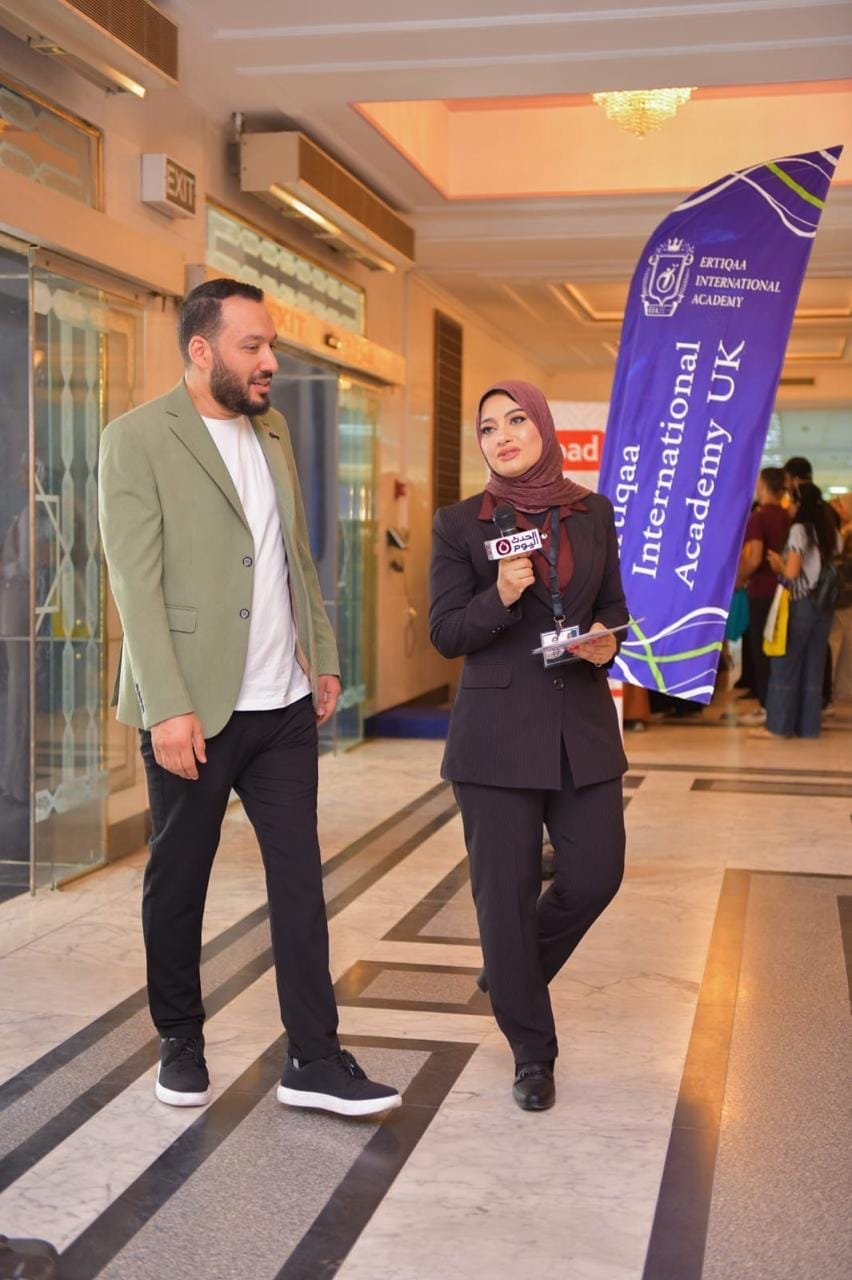
From the heart of the conference we had an exclusive interview withProf. Sherif Abdel Moneimthe educational consultant and teacher trainer specializing in integrating artificial intelligence into education
The interview addressed the issue ofemploying artificial intelligence in children's educationfrom an educational perspective that prioritizes building the child's skills before being dazzled by tools and tech applications
During the interview, Prof. Sherif affirmedProf. Sherifthat a proper start does not consist of teaching the child as many AI tools as possible
The issue is not about the speed of reaching an answer
but rather in the child's ability to pose the right question, analyze information, compare, experiment, create, then review and discuss what AI offers instead of relying on it entirely
The interview also covered the importance of presenting AI in a way that matches the child's age group while maintaining a balance between digital learning, reading, play, movement, communication, and human interaction
Amid this shift, theteacher remains a pivotal element in the educational process
Technology, no matter how advanced, requires a teacher who can select the appropriate tool and link its use to a genuine educational purpose, helping the student move from merely using the technology to thinking through it consciously and critically
The conference activities did not stop at theoretical discussion
Following the interview, Prof. Sherif presentedProf. Sherif Abdel Moneima practical lecture that addressedhow to leverage artificial intelligence to identify early indicators of students' talents and abilities
During the lecture, participants moved from listening to applying
The exercise began by creating a prompt with ChatGPT to develop a set of questions that gather information about the student's interests, thinking style, and skills evident in their answers
The questions were then turned into an online form using Google Forms and shared with participants, who experienced the process themselves and answered the questions
Then came the most important stage
which is analyzing the responses with artificial intelligence to extractpreliminary indicatorsabout strengths, interests, and skills that may appear in each student's answers
Based on these indicators, a set of activities and steps can be suggested for teachers to draft an initial plan that nurtures strengths and supports skills needing further development
However, using AI in this way does not mean it can definitively determine a student's talent
These results remain supportive indicators that should be read alongside the teacher's observation, professional assessment, and ongoing monitoring of the student, taking into account their age, educational environment, and individual differences
Here emerges one of the conference's key messages
The true value of AI in education does not lie in the number of tools we use, but in how we employ those tools to serve genuine educational objectives
The future of education is not built on AI thinking in place of the student
nor on it replacing the teacher
but ona teacher who knows how to employ technology consciously and a student who possesses the ability to ask questions, think, critique, and create
from the International Irtiqa Conference
Shaimaa Al-Tafahni
Event Today channel