

What remains of the Artificial Intelligence pavilion after forty-six days in the Leap?

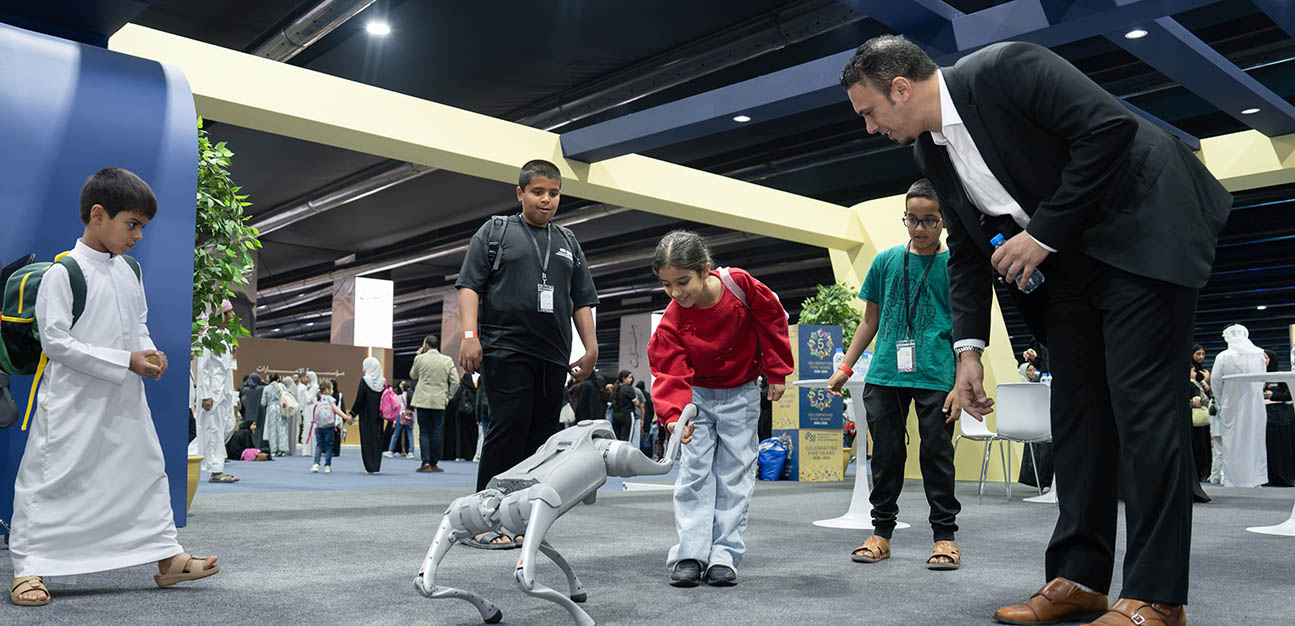
On August 21, the Sheikh Zayed Summer Festival announced the conclusion of its first edition in the Al Wathba area of Abu Dhabi, and its closing statement carried two figures: more than twenty thousand students enrolled, and more than ten thousand actually participated in the programmes. The third figure, the number of people who passed through the “World of Artificial Intelligence and Innovation” pavilion presented by Mohamed bin Zayed University of Artificial Intelligence, was not found in any published source. This report recounts what is confirmed and what remains uncertain.
The announced promiseAs the university announced on the programme page, the pavilion offered a free programme for the 15- to 18-year-old age group, covering command engineering and text- and image-generation to AI in games, and then reaching a practical question: how does a technical idea turn into a startup? The journey was supposed to end with a challenge in which teams presented prototypes before a judging panel. On paper, this is a compact study programme within an entertainment festival.
What the closing statement saidAccording to a report by Al Ittihad newspaper published on August 21, the festival lasted forty-six days and registrants came from more than 79 nationalities. The two announced numbers, over twenty thousand registrants and over ten thousand participants, are lower bounds rather than precise figures, so we do not calculate an attendance rate from them. The report lists the festival’s tracks: artificial intelligence, command engineering, machine learning, robotics, computer vision, augmented and virtual reality, and cybersecurity. Thus artificial intelligence was an item in a long list, not the festival’s headline.
The visit that documented the pavilionAbout two weeks earlier, on August 5, Al Ittihad published a story about Justice Minister Abdullah bin Sultan bin Awad Al Nuaimi’s tour of the festival. The minister visited the “World of Artificial Intelligence and Innovation” workshop, reviewed its applied programmes in AI applications, game development and entrepreneurship. The article added that the festival aims, according to its text, “to prepare a generation equipped with the knowledge and skills needed to meet future requirements.” This visit is the strongest published evidence we have that the pavilion was indeed operating at the heart of the festival.
The gap between the figure and the pavilionHere is the problem. We did not find the number of pavilion visitors, nor the names of the teams that reached the final challenge, nor the judges’ results, nor what the teams presented to the panel. The closing report does not mention the university or its pavilion by name. In addition, the number of workshops announced in the report itself does not match the daily rate mentioned, so we left it out of this analysis rather than build on it. The large figures say the festival succeeded in registration, but they say nothing about the quality of what a teenager learned in a command-engineering workshop.
Why does this matter to the regionBecause the question extends beyond a single festival. Many families in the Gulf and beyond are looking for a place where their children can learn AI without a pre-selected academic track. The summer festival tests a specific idea: can technical knowledge be transferred to a broad audience amid games and entertainment activities without getting lost in the crowd? The answer requires data that has not yet been published: how many completed the programme, what they built, and whether they took anything away.
What we are following nowWe are monitoring three things: the university publishing the final-challenge results, the release of figures specific to the pavilion instead of the whole festival, and the programme’s return in a second festival edition with a clearer format. If any of these appear we will return to them. Until then, the honest summary is that the pavilion was held by a senior ministry official, and the festival that hosted it attracted tens of thousands of registrants, while its educational impact remains unquantified.