

When AI Treats Books as Disposable Training Data

Listen to this article
Read by Anchor
If everything else is changing, books were hardly going to be spared. They had to change too. But the question is how?
We have heard about the problems AI companies, particularly Anthropic, have faced with publishers and intellectual property owners, and about lawsuits seeking huge damages.
The truth is that we are naturally convinced there is an inverse relationship between the advance of technological progress and the space left for privacy, even for literary and intellectual rights. There is a great deal of overlap on this point.
Today, anyone can ask any chatbot a question and receive an answer assembled from data gathered everywhere. And we are supposed to celebrate because it cites its sources? You have already served up the information, peeled and ready. Why would I give myself a headache searching that website or opening that book?
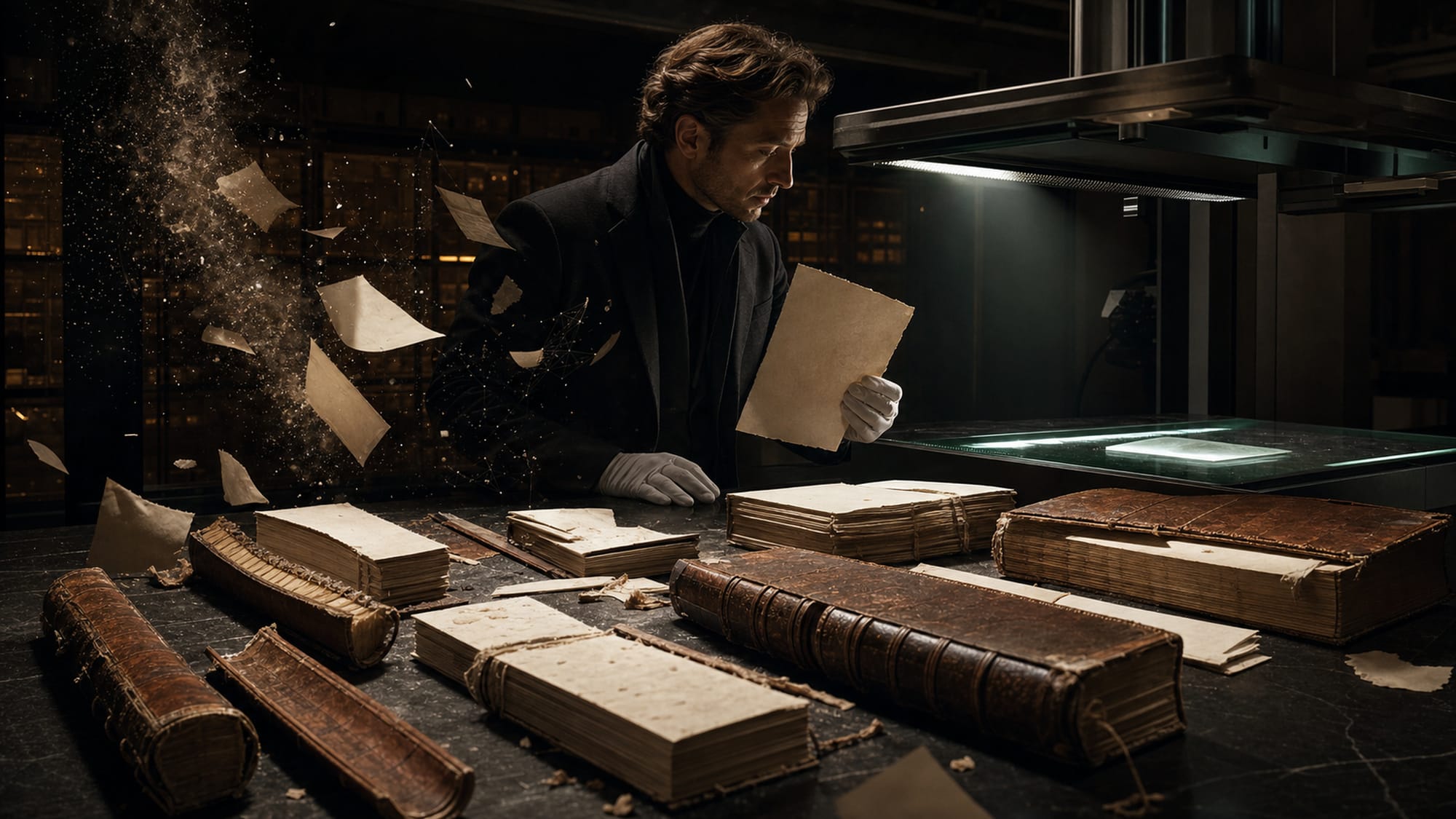
The obvious workaround used by AI companies is to buy old and rare books, physical books. We are talking about tonnes and thousands of titles, even quantities with six zeros. They dismantle them, cut them apart and scan their pages on huge flatbed scanners, then throw them in the bin for recycling. It shows you the ugly face of capitalism and the frenzied hunger to collect “clean” information drawn from human minds in the era before informational noise, tedious copying and imitation, and the disorder of AI.
No one should justify this as digital preservation. That is one story, while what is happening is another. We are facing a purely commercial operation whose sole concern is collecting the “virginity of human thought” from the era before informational pollution and the appearance of the first AI chatbot before the end of 2022.
Unfortunately, the treatment of books, particularly rare ones, is degrading. The book is transformed from a vessel of pure knowledge into mere training data. If only they respected it after taking what they wanted and restored it as it was. But no, throw it away and find another. The pile is large, the number of books is vast, and they are racing against time to get there before anyone else.
No one can stop or put the brakes on progress. That is not acceptable. But progress does not mean failing to preserve heritage and history. These books have become part of the history and development of humanity. Previous generations were far more intelligent. Yet in this frenzied, accelerating AI age, everyone seems to be chasing profit, even if that means trampling the remnants of the real human being within us and achievements that are hard to reproduce because they carry the spirit and scent of their own beautiful time.