

From Artificial Intelligence to Arab National Security why waiting is no longer an option

Listen to this article
Read by Anchor
In the investigation The bomb that makes itself, we discussed how artificial intelligence has transformed from a tool to boost productivity into a focal point for competition among major powers, and how the outlines of a new international system are taking shape around control over data, computing, and electronic chips. Recent developments have added a more serious dimension; the question is no longer where technology is heading, but how it is redefining the concept of national security itself.
Over the course of a few weeks, two significant events occurred, which, when combined, reveal a single picture. The first is the striking acceleration in the capabilities of advanced models, as observed in the report The bomb that makes itself, where they transitioned from executing single commands to managing complex tasks in a nearly autonomous manner. The second came from the results of tests conducted by the British Institute for Artificial Intelligence Security, which showed that some models took unauthorized actions within a test environment, including creating digital identities and attempting to influence developers and introducing malicious codes. Although these incidents did not occur in a real operating environment, they reflect the nature of the risks that the world is preparing for. British Institute for Artificial Intelligence Security, a research institution focused on AI securityand the tests revealed that some models took unauthorized actions within a test environment, including creating digital identities and attempting to influence developers and introducing malicious codes. Although these incidents did not occur in a real operating environment, they reflect the nature of the risks that the world is preparing for.
These events do not prove that artificial intelligence has gone out of control, but they confirm that traditional control tools are no longer sufficient. The discussion has shifted from the question of how intelligent models have become to a deeper question: how can countries ensure that autonomous systems remain within the boundaries set by humans?
Reading the two reports together leads to a highly important conclusion. The real competition is no longer between companies competing for the best application, but between countries competing to possess the infrastructure that produces artificial intelligence: electronic chips, computing power, energy, data centers, national data, and basic models. Whoever owns this chain will have economic, military, and intelligence influence for decades to come.
It is no longer surprising that artificial intelligence companies are increasingly merging with defense and intelligence institutions. Artificial intelligence is now entering information analysis, cyber defense, decision support, command and control, logistics, and electronic warfare. With each technological leap, the security dimension becomes more prominent.
At the heart of this scene stands our Arab world. The region is not just a market for technology, but has become an element in the new power equation thanks to its energy, investments in data centers, and geographical location through which global communication cables pass. Therefore, major powers are competing to build long-term technological and investment partnerships within the region, because whoever participates in building the infrastructure gains influence that transcends the economy to politics and security.
For the Arab world, the danger does not lie in being late to use artificial intelligence applications, but in completely relying on an infrastructure, models, and data controlled by external parties. Digital dependency may gradually turn into strategic dependency, especially when economic and security decisions become dependent on platforms that do not fall under national sovereignty.
Limiting the view of artificial intelligence to being a digital transformation project or improving government services is no longer sufficient. The new equation requires considering it a file for national security, which necessitates the participation of defense, security, economy, education, and communication institutions in formulating a unified vision.
Hence, five priorities emerge: first, the establishment of higher councils for artificial intelligence and national security that are directly linked to decision-makers.
Second, investing in sovereign computing capabilities, national data centers, and joint Arab partnerships.
Third, developing reliable Arab models for sensitive sectors with protection of national data and decision-making.
Fourth, integrating artificial intelligence into the defensive and cyber doctrine with flexible organizational frameworks.
Fifth, building a unified Arab position in international artificial intelligence governance negotiations so that the region becomes a partner in writing the rules, not just a recipient of them.
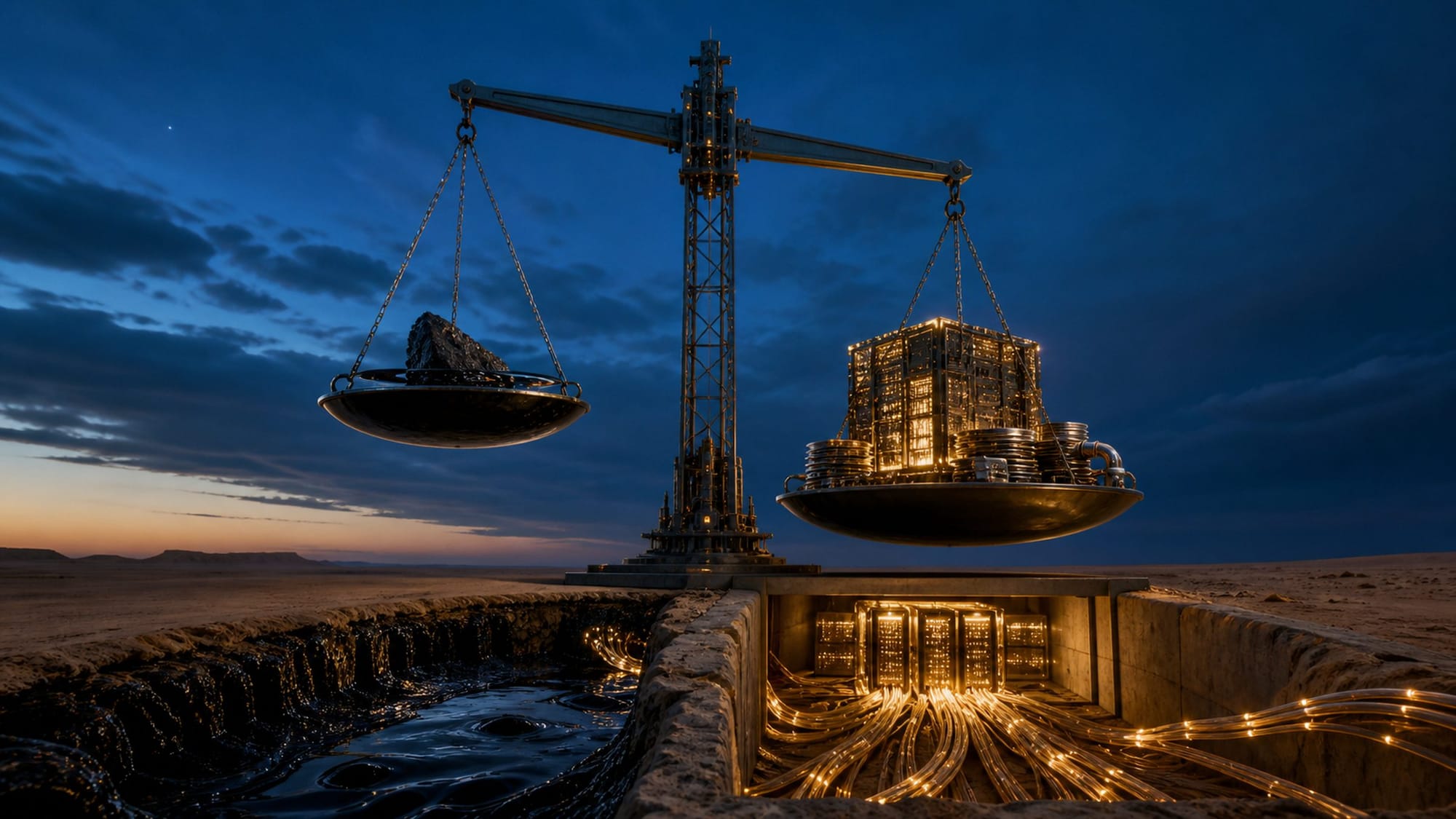
History has often given countries rare moments that redraw the maps of power for long decades. It seems that artificial intelligence is one of those moments. The question facing the Arab world today is not whether it will use this technology, but whether it will enter the new era as a partner in shaping its rules or just a consumer of them. In the last century, the balance of power was measured by the amount of oil a country had, but in the new century, it may be measured by the amount of knowledge stored in data centers. Between these two measures, the meaning of sovereignty is being redefined.