

AI Can Choose the Best Candidate, but Can It Convince Them to Join You?
AI is already part of HR, but persuasion, trust and understanding what drives people remain deeply human.

Listen to this article
Read by Anchor
This article first appeared in issue three of Talent magazine, March 2026.
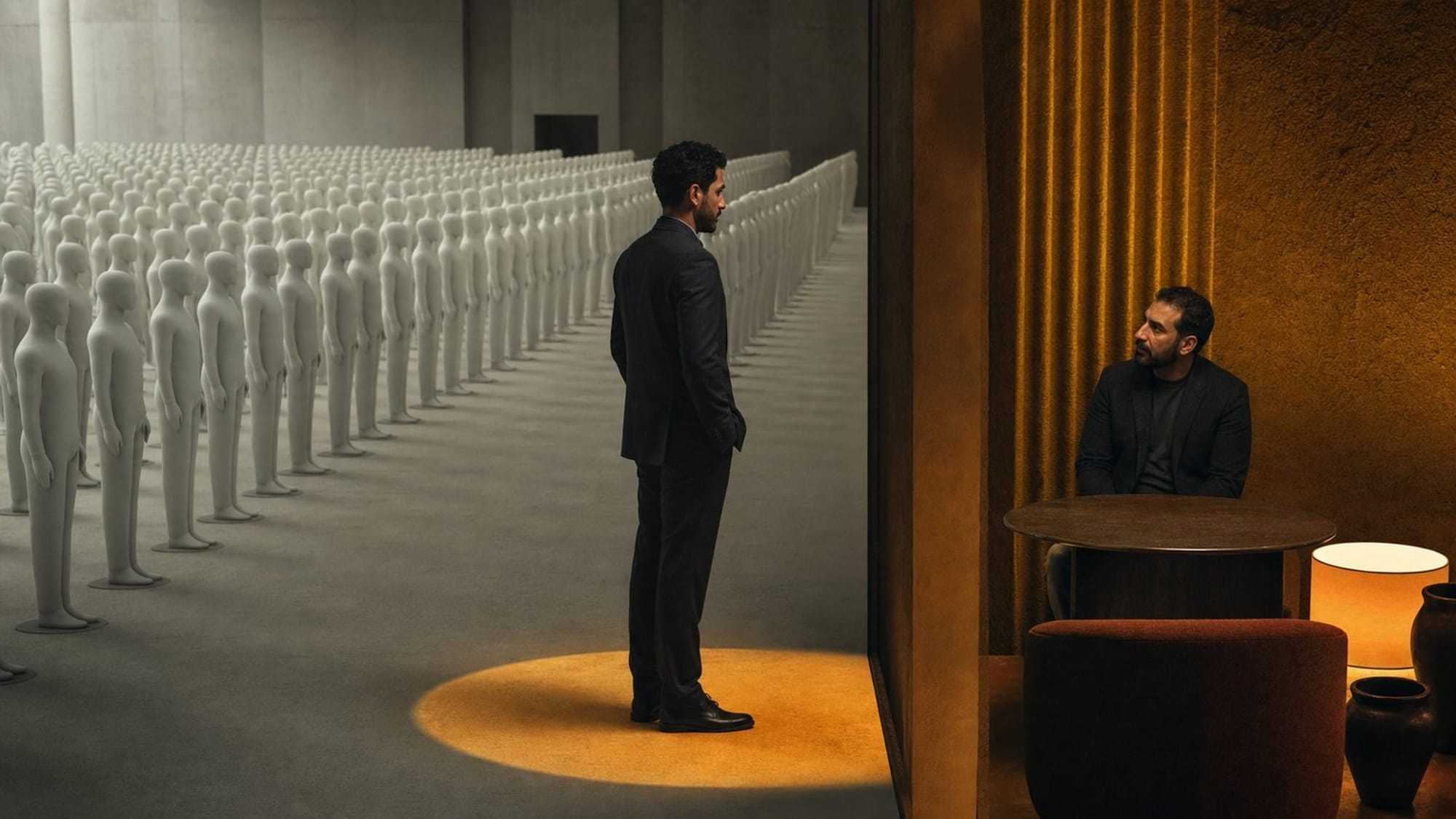
Imagine this with me
You have an AI system that can analyse thousands of CVs in minutes and give you a very clear result: this person is the best candidate for the job.
The numbers say so.
The data confirms it.
The algorithm is completely convinced by its choice.
But then a very simple question appears. Who will convince that candidate to leave their current job and come to work with you?
Who will sense their excitement or hesitation?
Who will understand from the conversation what they are really looking for?
And who can build the trust that makes them choose your company over many others?
This is exactly where the difference appears between artificial intelligence and human intelligence.
AI can help us make decisions faster, but understanding a human being still requires another human being.
That is where the real question begins: will AI replace HR, or will it change its role?
AI is now part of HR work
Let us be honest. AI has already entered human resources and now helps with many tasks.
Today, a single system can:
- Screen hundreds of CVs in minutes.
- Analyse performance and attendance data.
- Predict who may leave soon.
- Suggest suitable training programmes for each employee.
- Answer employee questions quickly.
According to a report by Gartner, around 76% of HR departments worldwide have already begun using or experimenting with AI tools in some of their processes.
That means this is not an idea for the future. It is already happening.
So what can AI offer HR?
AI helps organisations in many ways, most importantly:
- Speed. Instead of spending hours reviewing CVs, the system can do it in minutes.
- Data-based decisions. Analysing performance, attendance and productivity gives management a clearer picture.
- A better employee experience through faster answers to questions and analysis of training needs.
But despite all this, some things simply cannot be turned into numbers.
Because human resources is not just numbers
HR work is not merely reports or a system.

Sometimes it means:
- Supporting an employee who is going through a difficult time.
- Resolving a dispute between two teams.
- Motivating someone who has lost their enthusiasm for work.
- Creating a workplace that people actually want to come to.
These things cannot be calculated by an algorithm. They require human understanding.
AI may tell you who the best candidate is, but persuasion, trust and understanding motivation are still very human.
Will HR teams become smaller?
Honestly, that may happen in some companies. Routine tasks will decline with automation, which may mean companies no longer need the same large number of people for operational work.
At the same time, demand will grow for a different kind of specialist, such as:
- Strategic HR professionals.
- People analytics specialists.
- Digital-transformation experts.
- Employee-experience specialists.
- Technology-literate HR Business Partners.
Put simply, the headcount may fall, but the value will rise.
And now the important question: who will stand out in the future?
The people who truly stand out will not simply be those who work in human resources.
They will be the ones who understand how to use technology to their advantage while also understanding people well.
Because the truth we need to acknowledge now is this:
AI will not replace humans, but a person who does not know how to use AI may be replaced.
In the end
AI is not an enemy of human resources. It is simply a tool that can multiply its impact.
It can help us analyse data faster and alert us to many details.
But ultimately, relationships, trust and one human being’s understanding of another are things no one has yet managed to put into an algorithm.
That is why the future will belong neither to humans alone nor to machines alone.
It will belong to those who can combine technological intelligence with humanity in decision-making.
By Hadeer Almaghraby